
Comer mejor en los colegios britanicos
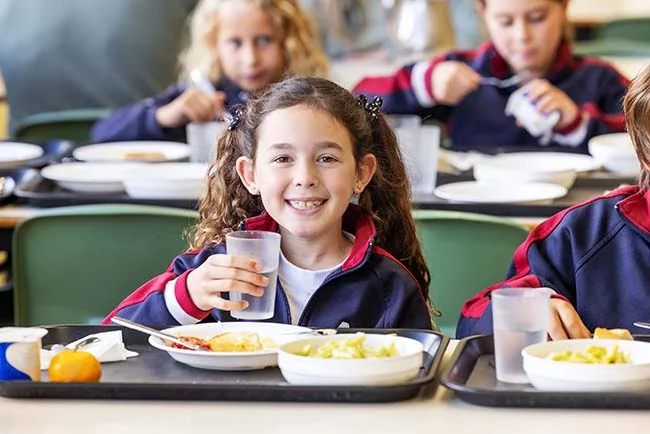
The British government aims to transform the eating habits of a generation without betraying the country's gastronomic identity.
In it United Kingdom, the School meals are once again at the center of political debate. The government's proposal by Keir Starmer The plan aims to eliminate fried foods from school menus in England, along with strict measures on sweets, desserts, and foods high in saturated fat. This is not a technical review of institutional food services, but rather an intervention that addresses public health, the cost of living, and cultural identity.
The data is hard to ignore: Approximately one in three children leaves primary school overweight., While tooth decay remains the leading cause of hospitalization for children between the ages of five and nine. The Minister of Education, Bridget Phillipson, He described the intervention as the most ambitious reform of school meals in a generation: less fried food, less sugar, more fruit, more fiber. A simple formula in appearance, revolutionary in practice.
At an operational level, the transition is not trivial. British school cafeterias are often managed by large operators. catering , These methods are optimized for speed and cost containment: fried food perfectly satisfies these needs. Replacing it requires investments in staff training, equipment upgrades, and supply chain renewal. Fresh ingredients and alternative cooking methods—oven, steam, barbecue—involve management complexity and potentially higher costs.
The real challenge, however, is cultural. In England, fried food is not just a food choice: it's a symbol of identity, a social icon deeply rooted in the country's industrial and popular history. Intervening in fish and chips means touching deep chords. in the collective perception. And for many families, the question isn't so much whether it's right to eliminate fried foods, but whether their children will actually eat the new dishes being offered. The risk of waste, food spoilage, and the use of snacks bought outside is real, especially in urban contexts like London.
Then there is the issue of inequality: schools in the most disadvantaged areas risk finding it difficult to implement the new standards without adequate resources. For this reason, the debate extends to free meal schemes and the role of the NHS in ensuring that reform does not accentuate the differences social.
Reforming the school menu ultimately means reforming much more.
